


 استشارة مجانية


R5 — officially known as the New Garden City district — is one of the largest residential neighborhoods in Egypt’s New Administrative Capital. Spread over roughly 1,000 feddans with about 80% dedicated to greenery and open spaces, it was designed as a modern counterpart to downtown Cairo’s classic Garden City: leafy, calm, and low-density compared to the capital’s busier districts. This guide walks you through what R5 actually offers, who it suits, and the practical questions to ask before committing to a unit there.
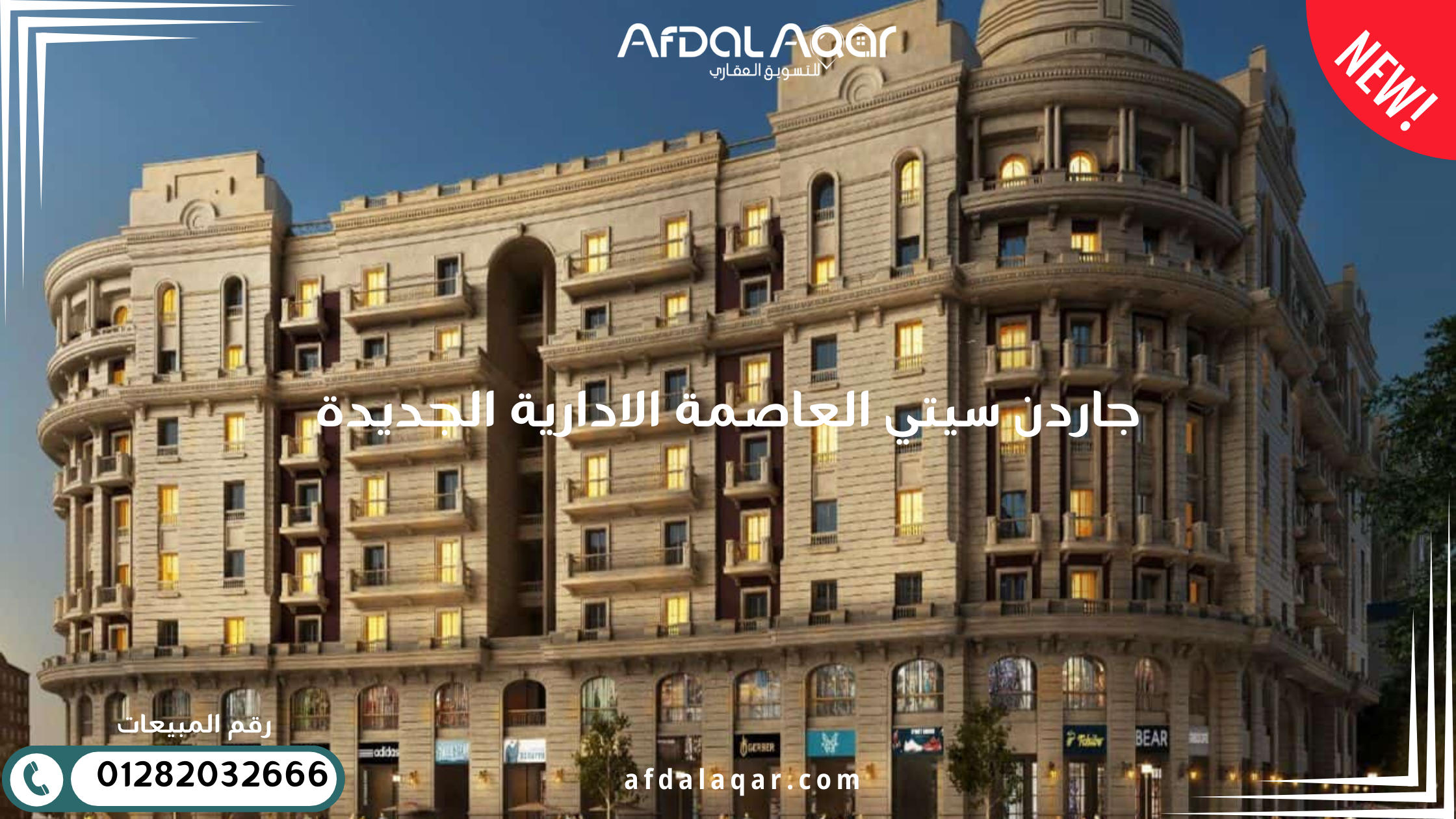
Where is R5 located inside the New Administrative Capital?
R5 sits in the northern-western part of the New Administrative Capital, positioned between the R6 residential district and the Air Defense House district. That placement gives it a strategic middle ground: close enough to the government district for commuters, yet tucked inside a quieter residential belt. Key nearby landmarks include the Ministries District, the Business and Financial District (the new banking hub), and the Diplomatic District (Al Sefarat).
In day-to-day terms, residents describe R5’s location as “central without the noise” — roughly 10–15 minutes from the government district, with straightforward access to the Regional Ring Road for trips toward Cairo or Suez. It’s one of the few districts where you genuinely feel the master-plan logic: everything is planned around neighborhoods (mahallat), each with its own commercial spine, school cluster, and mosque, rather than one giant sprawl.
Area and master plan by the numbers
| Item | Figure (approx.) |
|---|---|
| Total district area | ~1,000 feddans |
| Green and open space share | ~80% |
| Estimated residential units | ~25,000 units |
| Residential buildings | ~295 buildings |
| Unit mix | Apartments, villas, twin and townhouses |
The numbers tell the story of the district’s philosophy: low density, generous landscaping, and a mix of housing types so that different budgets and family sizes coexist in the same neighborhood — a deliberate contrast with districts that specialize in towers only.
What makes R5 different from other R-districts?
Every R-district in the New Capital has its own character, and R5’s identity is built on three pillars. First, the Garden City design language: wider setbacks, mature tree planning, and street networks that slow traffic inside the district. Second, unit diversity — villas, twins, townhouses, and apartment buildings coexist, which creates a genuinely mixed community rather than a single-class compound. Third, position: R5 neighbors the Air Defense House and sits within comfortable reach of both the government zone and the financial district, making it a practical choice for government employees and banking-sector professionals relocating to the capital.
Compared with R2 (closer to the airport side) or R3 (heavier apartment stock), R5 leans more “family residential” — fewer offices, more schools and parks within walking distance. If your priority is a calm, family-oriented environment with the capital’s job hubs a short drive away, R5 belongs on your shortlist.
Services and facilities inside the district
The district was planned as self-sufficient, meaning residents shouldn’t need to leave for daily needs:
- Medical: hospitals and polyclinics within and around the district — including specialized hospitals (children’s, women’s), radiology and lab centers, and pharmacy chains (El-Ezaby, Misr Pharmacies, 19011).
- Education: international and language schools (Knowledge International, Sahara International, Misr British International) plus university access via the European and Canadian universities complexes in the capital.
- Commercial: neighborhood commercial centers, malls, and restaurant and coffee-shop strips along the district’s main spines.
- Sports and leisure: gyms, fitness centers, squash courts, cycling and walking tracks integrated into the green plan.
Road network and commuting
R5 connects to the wider capital and Greater Cairo through a set of major axes: the Middle Ring Road, Bin Zayed Axis (a direct link toward Cairo), Cairo–Suez Road, and Cairo–Ain Sokhna Road. Inside the capital, the Central Axis and the district’s internal loops carry local traffic. Practically, this means: downtown Cairo is reachable without crossing the capital’s core, and New Cairo or Sokhna weekend trips have direct routes.
For daily commuters, the practical advice is to test the drive at your actual commuting hour before buying — master-plan distances and real rush-hour minutes are two different things, and the capital’s road usage is still evolving as districts populate.
Notable compounds and projects in R5
Several developers have projects in or adjacent to R5’s footprint. The standout names include Baroque by City Edge Developments — the same developer behind Al Maqsad — offering apartments and commercial units with fully finished delivery, alongside other residential projects by established developers. Each compound has its own payment plans, delivery timelines, and finishing specs; the common thread is the district-level master plan they sit inside.
Our tip: evaluate the compound and the district together. A great unit in a poorly progressing compound — or the reverse — both end in regret. Check the developer’s delivery track record in the capital specifically, not just their brand name.
Units, spaces, and finishing levels
R5’s unit menu spans compact apartments (starting around 100 sqm), mid-family apartments, up to townhouses, twin houses, and standalone villas. Finishing levels vary by project — from core and shell to fully finished (Ultra Super Lux) — and this single variable can swing your real budget by a wide margin: a finished unit at a higher per-meter price is often cheaper overall than a shell unit plus your own finishing costs and supervision time.
When comparing offers, always ask three questions: what exactly does “finished” include (flooring? kitchens? ACs?), what are the maintenance fees per meter per year, and what is the contractual delivery date with the delay clause. These three answers define the real cost of the unit far more than the headline price per meter.
Who is R5 right for?
Strong fit: families seeking a calm, green, low-density environment; government and financial-sector employees relocating to the capital; buyers who want villa-style living inside a full-service district; medium- to long-term investors betting on the capital’s population growth.
Think twice: if you need immediate occupancy (check each project’s actual delivery status), or if your daily life is anchored in far-west Cairo (6th October or Sheikh Zayed) — the commute across Greater Cairo is the price you’d pay, and no district charm offsets a brutal daily drive.
Payment plans: how to compare offers properly
Developers in R5 typically offer installment plans ranging from 5 to 10 years with down payments from 5% to 20% depending on project phase and pace of sales. Rather than comparing headline numbers, compare total commitment: down payment + all installments + maintenance + finishing costs. A longer plan usually carries a higher per-meter price — that’s the embedded cost of financing, and it’s fair as long as you see it clearly.
For a quick sense of your annual and monthly numbers across different plans, try our housing calculator — it works for any district and shows the total cost of ownership, not just the monthly figure.
R5 vs other New Capital districts: quick comparison
| District | Character | Best for |
|---|---|---|
| R5 (New Garden City) | Green, low-density, mixed housing | Families, long-term living |
| R2 | Closer to the airport side, earlier delivery waves | Buyers wanting sooner occupancy |
| R3 | Heavier apartment stock, denser | First-time buyers, smaller budgets |
| R7 / R8 | Newer waves, more villa-heavy pockets | Villa seekers, patient timelines |
Use this as orientation, not gospel — inside each district, individual compounds vary more than the districts differ from each other. The right question is always: which specific project, at which delivery date, at which total cost, serves my plan?
A practical visit checklist for R5
If you’re serious about R5, plan a half-day visit and cover these five stops: (1) the compound you’re considering — walk the actual unit’s floor, not the show villa; (2) the nearest school cluster, at drop-off time if possible; (3) the commercial spine — check what’s operating today versus “coming soon”; (4) the drive from the district gate to your workplace direction at commuting hour; (5) a second compound in the same district as a comparison anchor. Photos and brochures flatter; a visit tells you what’s real.
One more habit worth adopting: talk to two or three residents or site workers candidly. Ask what annoys them daily. The answers — water pressure, internet quality, construction noise hours — are the details no brochure mentions and no agent predicts.
FAQ about R5 New Administrative Capital
Is R5 the same as New Garden City?
Yes — R5 is officially the “New Garden City” district, named for its design inspiration from Cairo’s classic Garden City neighborhood.
How far is R5 from the government district?
Roughly 10–15 minutes by car depending on your exact starting point inside the district and traffic conditions.
Are there villas in R5 or only apartments?
Both. The district’s plan includes apartment buildings alongside villas, twin houses, and townhouses — one of the few R-districts with this level of mix.
What documents should I verify before buying in R5?
Three essentials: the project’s land allocation documents from ACUD (the New Administrative Capital’s authority), the developer’s registration and track record, and the full unit contract draft — read before paying, not after. Verify the unit’s precise location in the master plan (some “R5 projects” sit on the district’s edge borders), the payment schedule with all penalty clauses, and the maintenance contract terms. If any document is promised “later”, treat that as a red flag — legitimate developers have paperwork ready.
How is internet and utilities infrastructure in R5?
The New Capital was planned with modern utilities from the start — fiber-based internet, underground wiring, and centralized utilities — but actual service quality depends on how populated your specific pocket of the district is. Newer pockets have thinner service competition. Ask current residents about real internet speeds and any utility interruptions; infrastructure “exists” and infrastructure “works well” are separated only by occupancy levels and time.
Is R5 a good investment?
The investment case rests on the capital’s gradual population growth and the district’s family-oriented master plan. As always, the specific project, entry price, and payment terms matter more than the district average — evaluate each offer on its own numbers.
Can foreigners buy in R5?
Yes — the New Administrative Capital operates under rules that allow foreign ownership in designated residential areas, and developers regularly handle foreign-buyer paperwork. The process adds some steps (passport-based registration, currency considerations), so expect the timeline to stretch slightly compared with local buyers. Work with a developer experienced in foreign sales, and get the ownership documents reviewed independently before final payment.
What is the rental potential in R5 today?
Rental demand in the New Capital is growing district by district as government offices and universities fill up, but it’s still earlier in the curve than established Cairo areas. R5’s family orientation and green plan position it well for medium-term rental demand from relocating professionals. If rental yield is your primary metric, ask for actual comparable rentals in the specific compound — not district averages — and weigh them against the capital’s still-maturing occupancy timeline.
Final word
R5 is one of the most balanced districts in the New Administrative Capital: green, family-oriented, well-positioned between the capital’s job hubs, and flexible in housing types. The district passes the “livability” test on paper — your job as a buyer is to verify the execution: visit the compounds, test the commute, read the delivery clauses, and compare total costs, not marketing headlines. And if you want a hand comparing live offers in R5 or anywhere in the capital, our advisors compare actual current terms — and stay with you until signature. The district deserves its reputation; your job is simply to make sure the specific deal lives up to it.